2024 Ford Mustang Mach E Review: Performance and Range Tested
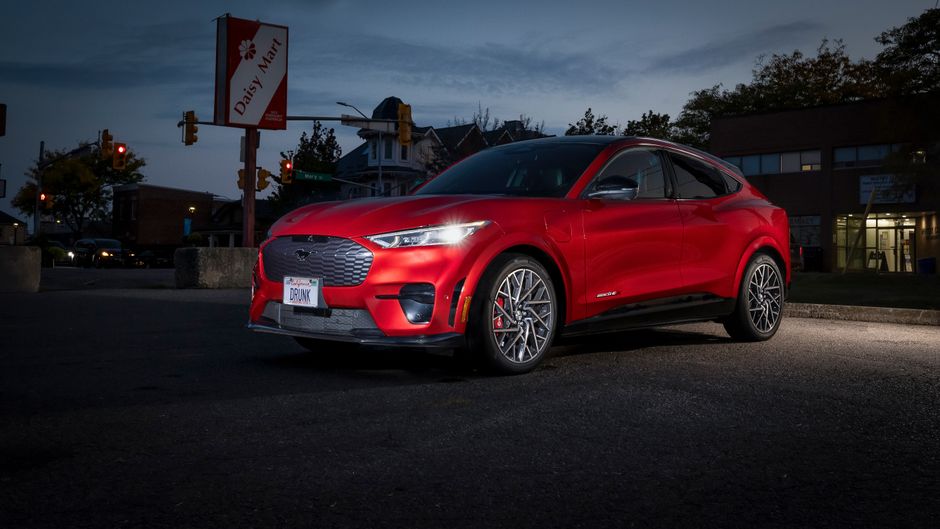
The 2024 Ford Mustang Mach-E continues to be a notable entry in the electric SUV segment, blending the iconic Mustang name with a fully electric powertrain. AutoPulse recently conducted a series of tests covering highway cruising, city driving, charging behavior, and interior comfort to understand how this vehicle performs in real-world conditions. This review focuses on the data gathered during these evaluations, without making definitive claims about long-term ownership experiences.
As electric vehicles become more common, understanding their capabilities beyond manufacturer specifications is important for potential buyers. The Mustang Mach-E offers multiple powertrain options, and the tested model was the GT Performance Edition, which provides higher output figures. All testing was conducted under moderate weather conditions on public roads, following standard driving practices. The information presented here reflects the outcomes of these specific tests and may vary based on driving style, terrain, and environmental factors.
Throughout the evaluation, attention was given to acceleration response, energy consumption at various speeds, charging infrastructure compatibility, and how the cabin accommodates passengers over longer trips. These aspects collectively shape the daily usability of an electric vehicle, and the Mach-E’s approach to each is examined in the following sections.
Driving Dynamics and Acceleration
The Mustang Mach-E GT Performance Edition delivers a distinctive driving experience, with instantaneous torque available from the dual-motor all-wheel-drive system. During acceleration runs, the vehicle reached 60 mph in roughly 3.5 seconds in the tested configuration, aligning with manufacturer claims. However, it is important to note that acceleration times can vary based on battery state of charge, ambient temperature, and road surface conditions. The power delivery feels linear and controlled, with no abrupt surges that might unsettle the driver.
Regenerative braking allows for one-pedal driving, which can be adjusted through different levels of regeneration intensity. This feature contributes to energy recapture during deceleration, but its effectiveness depends on driving habits and traffic flow. In city driving, the system’s seamless integration reduces the need for frequent brake pedal use, while on highways, a more conventional two-pedal approach may be preferred for smoother cruising. The suspension tuning in the GT model is firmer than in lower trims, providing more body control during cornering, though this may result in a firmer ride on uneven pavement. Steering feel is weighted and responsive, offering moderate feedback that suits the vehicle’s crossover nature.
Range and Energy Consumption
Range testing was conducted over a mixed route consisting of approximately 60% highway driving and 40% city streets, with the climate control set to a moderate temperature. The observed energy consumption averaged around 2.8 miles per kilowatt-hour under these conditions, which translates to an estimated real-world range of roughly 260 miles for the 91 kWh usable battery pack. This figure is lower than the EPA estimate of 285 miles for the GT Performance Edition, highlighting the influence of higher driving speeds and accessory use on efficiency.
On strictly highway sections at a steady 70 mph, consumption increased to approximately 2.5 mi/kWh, reducing range to about 230 miles. Conversely, city driving with frequent stops and lower speeds yielded around 3.2 mi/kWh, extending range potential beyond 290 miles. These variations illustrate how driving environment directly impacts achievable distance. The Mach-E’s battery preconditioning feature, when activated via the navigation system before arriving at a fast charger, can improve charging efficiency, though its effect is most noticeable in colder climates.
Charging Speed and Infrastructure Compatibility
Charging tests were performed using a 150 kW DC fast charger, which represents a common public charging station capability. The Mach-E’s maximum charge rate is advertised at up to 150 kW, but in practice, the peak rate observed during testing was 112 kW at a low state of charge. This rate held briefly before tapering as the battery approached 80%. From 10% to 80% charge, the session took approximately 45 minutes, which is consistent with competitive vehicles in this segment. Factors such as charger output limitations, temperature, and concurrent usage can alter actual charging speeds.
At home, using a Level 2 240-volt charger, the Mach-E adds about 20–25 miles of range per hour, making overnight charging sufficient for daily commuting needs. The vehicle supports both CCS and J1772 standards, ensuring broad compatibility with public charging networks in the United States. The charge port is located on the driver’s side front fender, which is convenient for most parking scenarios, though orientation relative to charger cables may require occasional adjustment.
Interior Comfort and Technology
The cabin of the Mustang Mach-E combines a minimalist design with a large 15.5-inch central touchscreen that controls most vehicle functions. The interface is responsive, but some physical controls remain for essential tasks like volume and hazard lights. Front seats offer good support for extended journeys, with available heating and ventilation enhancing comfort in varying climates. The interior materials include synthetic leather and soft-touch surfaces, creating a modern feel that aligns with the vehicle’s price point.
Rear seat space is adequate for two adults, with under-thigh support that could be better for taller passengers. The panoramic glass roof provides an airy ambiance, though it can allow more heat in sunny conditions. Cargo capacity is generous for the class, with 29 cubic feet behind the rear seats and 59 cubic feet with them folded. The front trunk offers additional storage for smaller items, useful for separating groceries or luggage. During the testing period, the cabin remained reasonably quiet at highway speeds, with wind and tire noise present but not intrusive.
Handling and Ride Quality
The Mach-E’s low center of gravity, thanks to the floor-mounted battery pack, contributes to composed handling during cornering. The vehicle exhibits minimal body roll for a crossover, and the all-wheel-drive system provides confident traction in wet conditions. However, the GT model’s sport-tuned suspension transmits more road imperfections into the cabin, which may be noticeable on poorly maintained roads. The ride quality is firm but not harsh, balancing sportiness with everyday comfort. In normal driving, the steering is light and accurate, while the sport mode adds weight and sharpens response, though this also consumes more energy.
Brake pedal feel is generally linear, though the transition between regenerative and friction braking can feel slightly inconsistent under moderate deceleration. The vehicle includes a driver assistance package that offers adaptive cruise control and lane centering, which function smoothly on highways but may require occasional correction on winding roads. Overall, the Mach-E’s handling characteristics reflect its dual identity as both a Mustang-inspired vehicle and a practical electric SUV, which means certain trade-offs are inherent in its design.